Feeling Like Roommates With Your Spouse and How to Reconnect
Published on 7th October, 2026

[AI Summary]
Feeling like roommates with your spouse can develop when daily responsibilities, work, and family routines gradually replace meaningful conversations and quality time. This is sometimes called “roommate syndrome,” although it is not a clinical diagnosis.
The good news is that feeling disconnected does not necessarily mean your marriage is failing. Small changes, such as regular check-ins, shared activities, and more open communication, can help rebuild connection.
If these efforts are difficult or don't create much change, marriage counseling can provide structured support to improve communication, address unresolved issues, and rebuild the relationship.
Feeling like roommates with your spouse can happen gradually. Conversations shift to bills, chores, children, and schedules, while affection, meaningful conversation, and quality time become less frequent. This dynamic is often informally called “Roommate Syndrome.”
While it is not a clinical diagnosis, it can describe a real sense of emotional distance that may lead couples to seek marriage therapy.
This guide explains why it happens, what couples may notice, practical ways to reconnect, and what marriage counseling in Singapore involves.
Key Takeaways
- Feeling like roommates is a relationship pattern, not proof that the relationship is failing.
- Small, repeated actions can help, but they work best alongside honest conversation and, when needed, professional support.
- You do not need to be in crisis to benefit from marriage counseling.
- Support ranges from short, focused sessions to longer-term work, depending on what is going on.
Why You Feel Like Flatmates Instead of Partners
When a household runs smoothly, conversation naturally narrows to what needs managing, such as bills, school pickups, whose turn it is to cook.
It is efficient, but it also means emotional conversation quietly disappears, often without either partner noticing until much later.
Feeling like roommates is a relationship pattern, and it doesn’t mean that a relationship is failing. It responds better to small, repeated actions than grand gestures.
What Couples Often Notice First
Couples rarely come to us describing "roommate syndrome" in those exact words. Over time, we tend to hear the same handful of observations, in some combination:
- "We only talk about logistics, the kids' schedule, bills, groceries."
- "I can't remember the last conversation that wasn't about something practical."
- "I feel relieved when they're out, and I feel guilty admitting that."
- "We've stopped bringing up certain topics because it's easier to avoid the argument."
- "We're barely on the same sleep schedule anymore."
- "We used to have things we did together. We don't really anymore."
- "There are things going on with me that I just haven't mentioned."
- "If someone asked me to describe them, 'good housemate' is honestly closer than 'partner'."
If several of these sound familiar, it may be time to pay closer attention to the connection between you and your spouse. Many couples go through periods like this, and recognizing the pattern can be the first step toward reconnecting.
What Causes the Distance
Emotional distance can develop for many reasons, and often several factors interact over time.
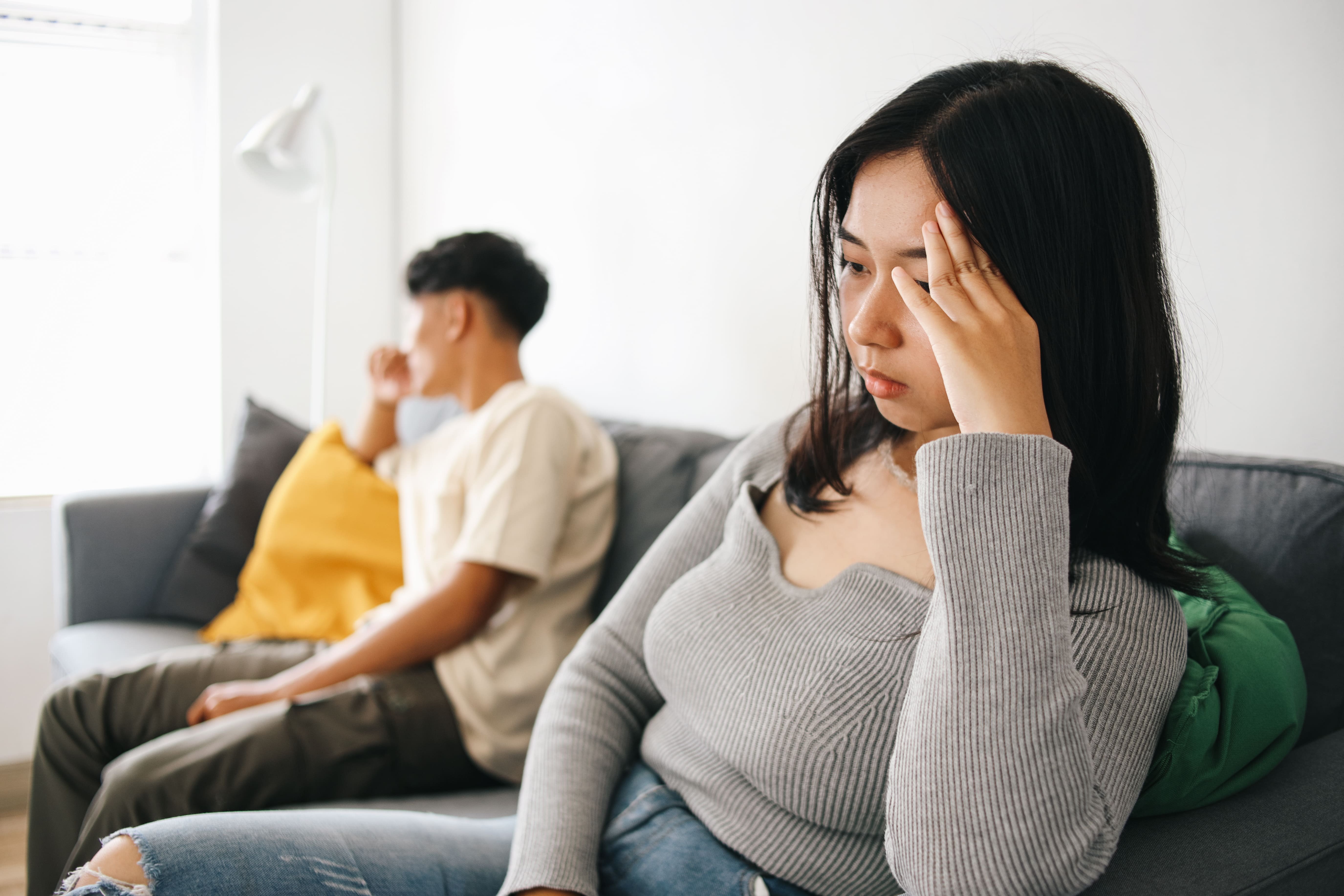
In our experience, it usually comes down to one or more of the following.
- Logistical overload and mental load. When one or both partners carry the entire family calendar in their head, conversation stays task-based by default because little bandwidth is left for anything else.
- Shift work and mismatched schedules. Couples in healthcare, F&B, and other shift-based roles can be physically present in the same home yet rarely awake and free at the same time.
- Busy-season work rhythms. Audit, finance, and project-based roles create months of near-absence that can quietly harden into a routine neither partner chose deliberately.
- Empty-nest transition. Once children move out, the shared project that structured daily life ends, and some couples realize they have not spoken as partners, rather than as co-parents, in years.
- Differences in cultural expectations and communication styles. Partners may have different expectations around directness, conflict, family roles, affection or decision-making. These differences can influence how each person interprets the other's behavior.
- Retirement and role shifts. Sudden round-the-clock togetherness after decades of separate routines can expose distance that was previously masked by busyness.
Why Feeling Disconnected Does Not Mean Your Marriage Is in Crisis
Feeling more like roommates does not necessarily mean your marriage is failing. For many couples, the emotional connection has simply become weaker over time as work, household responsibilities, children, and daily routines take priority.
This matters when deciding what kind of support may help. Some couples seek counseling after a major problem, such as infidelity or a serious conflict. Others seek help because they feel disconnected and want to improve their relationship before the distance grows into resentment.
Marriage counseling is not only for couples in crisis. It can give couples a safe, structured space to talk about what has changed, understand each other's needs, and rebuild the connection that may have been lost in the demands of everyday life.
Small Starting Points, Best Tried Alongside Honest Conversation

The following are reasonable places to start, but they work better as conversation starters than as a full fix. Roommate syndrome usually took months or years to build, and a few habits will not undo it on their own.
For many couples, these can be useful starting points alongside more open conversations about how the relationship has changed. If those conversations repeatedly get stuck, become conflictual, or feel difficult to have, couple therapy can provide additional structure and support.
- A short daily check-in. Skip logistics entirely and ask one question, such as "What was the hardest part of your day?"
- A weekly, protected 30 minutes. Same time, same place, phones away.
- One shared activity brought back. A walk, a podcast, a cooking task, something that involves doing together rather than only watching something side by side.
- Softer language in disagreements. "I noticed" tends to land better than "you never."
- One meal a week with no shop talk.
If these efforts do not seem to change the pattern, or if attempting these conversations repeatedly leads to avoidance or conflict, talking with a couple therapist may be helpful.
How Marriage Counseling Can Help Couples Reconnect
Marriage counseling gives couples a structured space to talk about what has changed in their relationship and work on it together. The goal is to understand each other and improve how you relate.
A counselor may help couples:
- Identify patterns of disconnection, such as repeated arguments, avoidance, or conversations that only revolve around daily responsibilities.
- Improve communication by learning how to express concerns and needs without turning every conversation into a conflict.
- Address unresolved issues that may be creating resentment or emotional distance.
- Rebuild connection through practical changes that help couples spend more meaningful time together and feel like partners again.
What to Expect From Marriage Counseling
Early sessions typically focus on understanding the relationship, what brought you to counseling, and what each partner hopes to change. Later sessions may focus on communication, recurring conflicts, and specific patterns affecting the relationship.
You do not need to wait until your marriage is in crisis to seek counseling. If you and your spouse increasingly feel like housemates rather than partners, seeking support earlier can give you an opportunity to work on the distance before it becomes more established.
Choosing the Right Marriage Counselor in Singapore
Look for a clinician with appropriate professional qualifications as well as specific training and experience in couple work, since working with two people at once requires different skills to individual therapy.
A few practical questions worth asking before booking:
- What is your general approach, and how do you tailor it?
- Roughly how many sessions do most couples in situations like ours need?
- What are your fees, and do you offer online sessions?
Beyond appropriate qualifications and experience, it is also important that both partners feel heard, respected and able to speak openly with the therapist.
Marriage therapy services like those at Psych Connect draw on evidence-informed approaches to couple work rather than a single fixed method, adapting the approach to each couple's needs, culture, and goals.
How to Bring Up Counseling With Your Spouse
If you are the one who's done the research, how you bring it up matters.
Try something like:
- "I miss us. I found something that might help."
- "I am not saying we are broken. I am saying I want us to feel closer."
If your spouse seems reluctant, share the idea itself rather than jumping straight to booking an appointment, and suggest one session as a trial rather than a commitment.
A quick phone call with a prospective counselor beforehand can also ease anxiety about what to expect.
Marriage Counseling Can Help You Go Further
Emotional distance often develops through patterns that build gradually rather than because either partner has deliberately stopped caring. Small, honest conversations often help more than one grand fix.
Try talking openly and picking up one small habit this week. If nothing shifts after a while, or if it feels harder than it should to even start, that is a reasonable point to bring in a counselor rather than a sign of failure.
If you would rather explore marriage counseling from the outset, starting with a single introductory session is a low-pressure way to begin.
Frequently Asked Questions
How do I know if marriage counseling is worth it?
If talking it through on your own has not shifted anything, or you feel more like co-managers than partners, counseling can offer useful structure. It tends to be worth trying if both of you are willing to attend at least one session together.
How much does marriage counseling cost in Singapore?
Private couple and marriage therapy fees in Singapore vary considerably depending on the clinician's qualifications, experience and session length. Fees may commonly fall around SGD 250 - SGD 450 or more per session, so it is best to confirm the clinician's current fee and session duration directly.
Can marriage counseling help if we are not in crisis?
Yes. Couples do not need to wait until they are in crisis. Seeking support earlier can provide an opportunity to work on patterns before they become more established or resentment builds.
What if my spouse refuses to go for counseling?
If your partner does not want to attend, you can still seek individual support to explore your own experience, responses and options. If your partner later becomes willing to participate, the clinician can discuss whether joint couple work would be appropriate.
Is online marriage counseling effective?
Online couple therapy can be effective for many couples. Suitability depends on your specific needs, privacy at home, level of conflict, any safety considerations, and the counsellor's clinical judgment on whether it is appropriate for your situation.
Disclaimer: This article is for general information only and does not constitute professional mental health advice. If you are in emotional distress or experiencing a mental health crisis, contact Samaritans of Singapore (SOS) at 1767 or national mindline at 1771. If there is immediate danger, call 995 or go to the nearest emergency department.